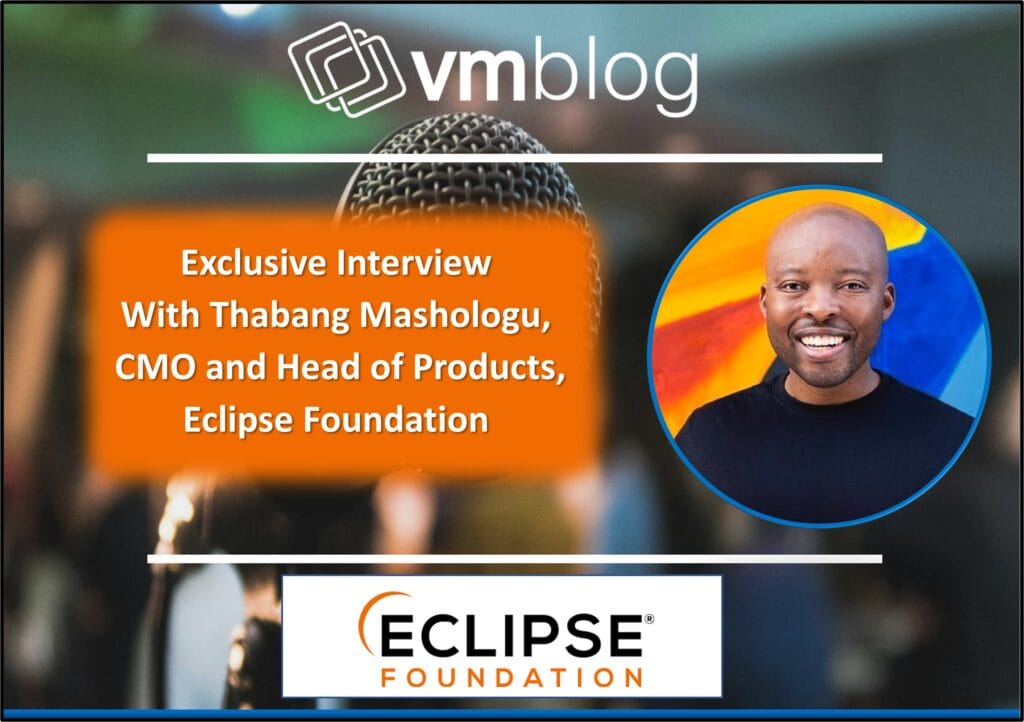
Thabang Mashologu, Chief Marketing Officer and Head of Products at the Eclipse Foundation, explains how the Open VSX Managed Registry helps keep Open VSX free and accessible for developers and open source projects, while supporting reliable, production-scale use for commercial enterprises that depend on it.
VMblog: Before we jump into the announcements, can you give us a quick background on the Eclipse Foundation?
Thabang Mashologu: The Eclipse Foundation is a Brussels-based open source software foundation and one of the largest in the world. We host more than 400 open source projects across a broad range of technology domains, including software defined vehicles, AI, cloud and edge computing, embedded systems, IoT, and RISC-V hardware cores.
In addition to advancing collaboration across these domains, many developers know us through the critical technologies they rely on every day, including the Open VSX Registry, Jakarta EE, Adoptium, and the Eclipse IDE. These projects form part of the open, vendor-neutral infrastructure that underpins modern software development, supported by transparent governance and a global ecosystem of contributors.
VMblog: Now for the news. What exactly is the Open VSX Managed Registry, and why is its introduction so important?
Mashologu: Open VSX Managed Registry is the production-grade managed service offered by the Eclipse Foundation for organisations that rely on the Open VSX Registry at sustained production scale. It provides professional operations, commercial assurances, and predictable scaling for organisations that need more than a public, community-oriented service can reasonably provide on its own.
The reason this matters is that Open VSX has become critical shared infrastructure. It now serves more than 300 million downloads per month, hosts more than 12,000 extensions from over 8,000 publishers, and supports a fast-growing ecosystem of modern and AI-enabled developer tools.
At the same time, the Open VSX Registry remains a free and openly accessible resource for developers, open source projects, and the broader ecosystem. That hasn’t changed, and it’s fundamental to how Open VSX is governed and operated.
As usage has grown, particularly from large commercial platforms and AI-driven environments, the demands on the registry have increased significantly. The managed service is how we align production-scale usage with supporting the infrastructure it depends on, while keeping the registry free, vendor-neutral, reliable, and openly accessible for everyone else.
Through the Eclipse Foundation’s independent and vendor-neutral governance, Open VSX remains transparent and open. What’s changed isn’t the openness of the project, but how production-scale usage is supported.
VMblog: What does Open VSX Managed Registry provide?
Mashologu: Open VSX Managed Registry provides the operational guarantees organisations need when they rely on Open VSX as production infrastructure.
For commercial platforms and enterprise teams, that means clearly defined service levels, predictable capacity, and support aligned with real production requirements. It gives them a professionally operated alternative to building and running a global extension marketplace themselves, which would be significantly more complex and expensive.
The service includes things like 99.95% availability targets with service credits, defined usage tiers based on sustained request volumes, and multi-region infrastructure for resilience and low-latency access. It also covers 24/7 monitoring, tiered incident response, capacity planning for high-volume and automated workloads, identity-based access controls, and vendor-neutral governance under the Eclipse Foundation.
Beyond that, it helps support the broader Open VSX ecosystem, including publisher trust, operational integrity, and long-term sustainability.
VMblog: Why is the Eclipse Foundation taking this approach?
Mashologu: We’re taking this approach to keep the Open VSX Registry free, vendor-neutral, and accessible to the developers, open source projects, and communities that rely on it.
The reality is that the previous funding model was becoming unsustainable. As Open VSX evolved into critical shared infrastructure, the cost of running and protecting it at this scale grew significantly. That includes compute, storage, bandwidth, security, resilience, and trust operations, all of which were increasing faster than membership and sponsorship could reasonably support.
At the same time, commercial and AI-driven usage placed much greater demand on the platform. What started as a community resource is now also relied on as production infrastructure by major commercial platforms, with much higher expectations around availability, operational response, and long-term stability.
Rather than let that strain impact the broader community, we worked with the heaviest commercial adopters to create a usage-aligned model. In simple terms, organisations that rely on Open VSX at production scale help support the infrastructure and operations needed to keep it secure, stable, and openly available for everyone else.
This approach gives those organisations a clear path to supported, SLA-backed operation at a fraction of what it would cost to build and run their own global extension marketplace. It also helps ensure the long-term sustainability of Open VSX as an open, vendor-neutral resource for the entire ecosystem.
VMblog: How has the community responded to this new approach?
Mashologu: We haven’t heard much from the community, and in this rare case, that’s a good thing. We designed this rollout deliberately to avoid disrupting individual developers and open source projects that rely on Open VSX every day.
We’ve kept things free and generous for individual developers, with rate limits of up to 3 requests per second, or 10,800 per hour sustained. We’ve also put an allow list in place so open source projects can access the same level of service as commercial adopters where needed. For most of the community, it’s been business as usual, which is exactly what we intended.
Where the response has been most visible is among organisations operating at scale. What they value isn’t just the usage tiers, but the commercial assurance behind them. That includes SLA-backed service credits, predictable capacity, and the confidence that they can scale on Open VSX without having to build and operate their own global extension marketplace.
Initial adopters such as AWS, Google and Cursor reinforce that point. For organisations using Open VSX as production infrastructure, this model provides a practical and significantly more cost-effective path than self-hosting at global scale, particularly when you factor in the ongoing requirements for security, reliability, and operations.
More broadly, it shows that we’ve found a way to sustain Open VSX as a free and open resource for developers, open source projects, and educational use, while giving large-scale commercial adopters a model that reflects how they actually use it.
VMblog: If organizations or developers want to learn more or get involved, where should they go?
Mashologu: The best place to start is the open-vsx.org where you can explore the registry, understand how it works, and see how it’s used across the ecosystem.
For those who want to get more directly involved, the Open VSX project is open source and available on GitHub at https://github.com/eclipse-openvsx/openvsx, where developers and organisations can contribute and participate in its ongoing development.
For organisations operating at production scale, more information on the Open VSX Managed Registry, including service tiers, SLA details, and pricing, is available at https://managed.open-vsx.org. They can also reach out to the team at [email protected] to discuss their requirements.
At the same time, the Open VSX Registry remains freely accessible for developers and open source projects, and that hasn’t changed.
##
About Thabang Mashologu
Thabang Mashologu is the CMO and Head of Products at the Eclipse Foundation, one of the world’s largest open source software foundations. In this role, he leads the Foundation’s working groups, marketing, events, and community programs worldwide. He has over 20 years of broad experience in the tech industry, including engineering, product management, marketing, developer relations, and community development at startups, enterprises, and open source foundations. He is passionate about increasing opportunities for people from diverse backgrounds and perspectives to contribute to and participate in open source.