The Internet of Things (IoT) and cloud computing are two separate aspects of technology that can work together to enable innovative solutions.
Neither have been around for very long but they’re already playing a massive part in the world of business. To illustrate that, the IoT alone is expected to be worth over $1 trillion by 2024.
This article will give you a brief overview of each before exploring how they can interact to offer all sorts of innovative solutions. Let’s dive in!
What Is the Internet of Things (IoT)?
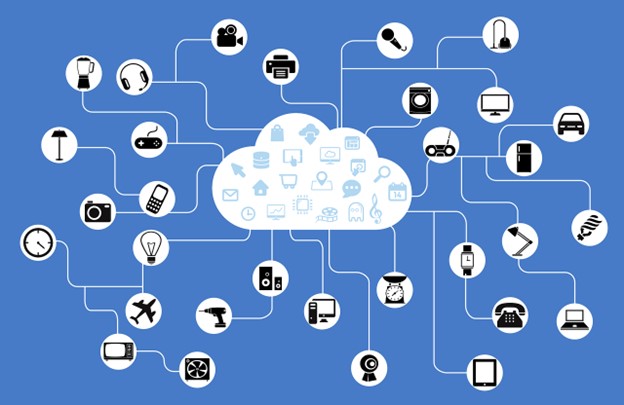
The Internet of Things (IoT) is a network of gadgets and machines that interact with their environment and communicate with a wider network. These devices (or ‘things’) involve either sensors or actuators (or both).
- Sensors monitor changes in their environment. For example, they may detect movement, changes in light or sound levels, or air quality variation. If an environmental aspect changes, sensors can measure that change. They can then communicate that information (as data) back to the control center.
- Actuators work the other way, initiating a change in the environment following a prompt from the control center. This may result in something moving, a light flashing, an alarm sounding, or a change in temperature.
A business can thus use IoT tools both to monitor and measure its environment (via sensors) and also to help orchestrate its environment (via actuators).
This has all sorts of applications. Let’s look at a few general examples.
- Stock levels can be automatically monitored, flagging when new deliveries are required, or placing new orders automatically.
- The movement of people or traffic can be monitored to help manage flow or capacity.
- Machinery and products can be monitored to alert if malfunctions occur or are likely.
IoT solutions can also support better customer care. Brands can monitor product performance in the market and issues can be addressed, proactively, by agents. Businesses can thus be more responsive, helpful, and informative than ever.
Think about, for example, how a call center can increase its efficiency by combining cloud-based auto dialer software with IoT tools such as smart self-service. Quality plus efficiency equals happy customers.
What Is Cloud Computing?
Cloud computing is the availability of computing services and resources over the internet (known here as “the cloud”). Those services typically include the following:
- Software and platforms
- Servers
- Networking tools
- Data storage
- Databases
- Data analytics
- Intelligence models

It’s worth being aware of three main types of cloud services.
- Infrastructure as a Service (IaaS): Businesses rent the actual IT infrastructure via the cloud (e.g., servers, virtual machines), which enables them to enhance their IT capabilities without investing in physical hardware (and associated costs) themselves.
- Platform as a Service (PaaS): This provides developers with an environment where they can build, run, and maintain their applications. Hosting such platforms in-house can be expensive and difficult to manage. Cloud-based versions reduce the pain for businesses.
- Software as a Service (SaaS): Through this, customers access a software application hosted ‘in the cloud’ (without installing it locally). The SaaS provider manages the software, keeping it updated and secure.
Even those with less technological knowledge have probably noticed the shift in recent years to SaaS as the dominant software model. From Dropbox (offering file management systems) to Convoso (with its best predictive dialer), many cloud service providers are staples of the B2B world.
Cloud computing offers various advantages over traditional, in-house IT infrastructure.
- Cost: Lower capital expense investing in hardware and software.
- Speed: Cloud services can often be set up and ready for a business very rapidly.
- Scalability: Cloud services can easily be adjusted to meet changing needs.
- Reliability and performance: Services are maintained by dedicated third-party teams, ensuring optimum performance.
- Maintenance: Your team will be less bogged down in dealing with IT maintenance as this will be outsourced to your third-party cloud providers.
- Security: Cloud providers are well-placed to focus on ensuring their services offer the very highest levels of security.

The above can help all aspects of a business. Take customer care, for example. Cloud services allow businesses to flex their call center teams to match changing requirements. With cloud-based call centers, businesses can easily sign up more (or less) agents, all equipped with powerful tools such as a power dialer app and automated routing.
How Does Cloud Computing Support IoT?
Cloud computing enables a wide range of businesses to benefit from the Internet of Things, offering scalable, reliable, secure, and cost-effective resources. Consider the following advantages when businesses use cloud services for their IoT solutions.
- Data storage and processing: The IoT involves the collection of vast amounts of data (via sensors), sometimes in real-time. All this data needs to be stored and processed somewhere. Opting for cloud services means businesses needn’t invest in hardware (and the associated storage and maintenance costs).
- Data analytics: Data is just a raw material – it is analytics that makes it usable. However, that can be incredibly complicated and power-intensive. The cloud provides access to the processing power this requires and the applications to make the data usable.
- Device connectivity: The IoT is all about connecting devices, and cloud computing can support this by providing the right infrastructure for collecting data from all those devices (and sending it back for processing).
- Applications: Businesses will need tools and applications in order to manage their IoT ecosystem and to deal with the vast volumes of data involved. Cloud computing helps here with numerous PaaS and SaaS options to choose from.
- Data security: The IoT can involve a huge amount of sensitive data, which makes security of paramount importance. By engaging with cloud providers, businesses can benefit from the high levels of protection they offer.
- Remote working: Increasingly hybrid patterns of work can be well supported by the combination of IoT and cloud computing. For example, some businesses are using IoT security protocols (biometric or facial recognition) to manage access to tools such as RealVNC remote desktop for Android and other essential resources for their online-based workforce.
Innovative Solutions
Bringing the Internet of Things and cloud computing together is opening up a vast array of innovations and optimizations to businesses. Here are some examples of the way this combination is already having an impact.
- Collecting ever-more data, from ever-more sources, to build an increasingly accurate picture of what is going on in a particular environment. That can lead to a better understanding of a setting and, in turn, better decision-making.
- More data coming in at a faster rate makes it easier for businesses to identify trends and patterns. Moreover, machine learning (ML) means that, over time, predictive models about particular aspects of a business can be refined.
- With ever more accurate, real-time information about aspects of their operations, businesses are able to take steps much quicker, including forestalling problems or exploiting opportunities.
- Many processes can be automated. For example, certain actions may be triggered as soon as certain conditions are met. Processes and workflows can be streamlined and inefficiencies removed.
- The above can all contribute to better customer service. If a business can be more proactive, informed, efficient, and better at making decisions, it should be better placed to serve its customers.
And that should all help businesses to become more effective, profitable, and better placed to continue refining their product innovations.
Examples of Innovation
Consider just a few examples of how the Internet of Things and cloud computing can combine to deliver practical and innovative solutions.
Smart Marketing
Some brands are finding innovative ways to use the IoT and the cloud to engage customers with their products. Take Walgreens’s digital cooler windows which adjusted the products they displayed and promoted based on who was browsing at it. This is a fine example of leveraging the combined power of IoT and the cloud to find lesser known ways to generate leads and boost your brand’s competitive edge.
Smart Retail
From providing data and insights to enhancing the customer experience, the IoT offers retail businesses exciting possibilities. For example, it can help businesses monitor aspects of their operations, such as stock levels and quality, customer flow, and checkout availability – but this can benefit shoppers, too.
Let’s imagine that you’re based in the UK and are looking for some good-quality outdoor gear. You visit your usual online store, except you accidentally land on its .ca domain. You may initially wonder: what is a ca domain? Soon, though, you realize that you’re on the Canadian site of the brand.
Browsing for products on this site won’t be relevant to you, as it will only show which items are available in that specific area. So, you go back to the UK domain, certain that now you’ll be able to view exactly the right products, at the right stock levels.
And how do all these different sites and domains keep track of stock levels and demand? With IoT solutions and cloud computing, of course.
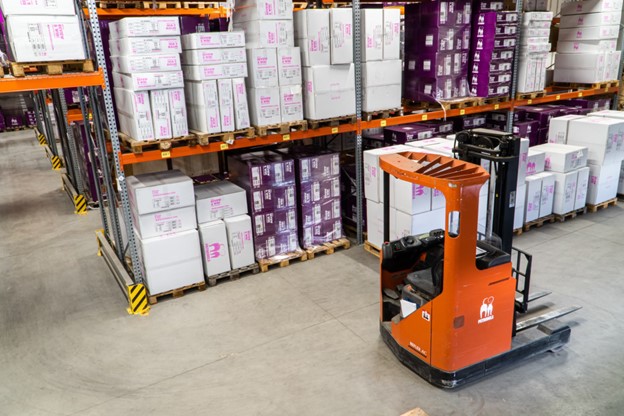
But it will also allow them to make real-life adjustments to the environment to better meet customer needs (and so maximize sales). For example, customers might interact with displays to access product information, or they might be led by IoT devices straight to products they have researched at home.
The IoT and Cloud Computing: A Winning Team
As we have discussed in our article, combining the power of the IoT with cloud computing is already leading to significant changes and improvements in a whole range of sectors. And no wonder: it offers massive advantages around data storage, processing power, scalability, flexibility, and security.
It certainly pays to consider how businesses in your sector are already using this technology. What innovative solutions might it mean for your business?
##