By Pete Castello, Chief Revenue Officer (CRO) of Spinnaker Support
Recent layoffs across the technology sector are beginning to reshape enterprise support. For the individuals affected, the immediate reality is deeply personal, and the road ahead is uncertain. It’s also a reminder of the impact of these layoffs: a declining set of opportunities for those who work in our sector. I see it firsthand, as I have three children in the workforce, and this impacts them. However, in addition to the human cost, an equally mission-critical challenge immediately raises its head for the organizations deploying the technology affected by these decisions.
Enterprises that depend on long-standing Oracle, SAP, and other core systems may now be forced to address unplanned, vendor-related service uncertainty. As software vendors redirect investments into AI, cloud, and other growth areas, resources are being shifted away from other parts of the business, including support. However, for organizations that depend on these enterprise software systems, this uncertainty raises concerns about how they will be supported in the future, and what that means for long-term system reliability.
The negative impact of vendors reducing their support resources is usually gradual, because systems do not fail all at once. Instead, small changes begin to surface in everyday interactions. Response times may be slower, and it can take longer to reach someone who understands the issue. Cases may move between multiple engineers, requiring teams to repeat information. Over time, that erodes confidence in the overall support experience. Access to experienced engineers is another challenge, as senior talent brings a depth of understanding that is difficult to replace. During restructuring, those roles are often reduced or redefined. As a result, support may still be available, but resolving complex issues can take longer and require more escalation.
For IT teams, dependability is essential. Many enterprise systems sit at the center of daily business operations, supporting finance, HR, supply chain, and other processes. When issues arise, support delays can quickly affect multiple parts of a business. Even small disruptions can create larger downstream problems.
One of the first areas customers see performance erode is in continuity. Support teams that once provided consistent points of contact can become more fragmented. Engineers rotate more frequently, and knowledge of specific environments becomes harder to retain. In complex systems, where past configurations and customizations matter, that loss of familiarity can slow progress.
While organizations continue investing in newer technologies that promise future growth, legacy systems remain widely used but are no longer the primary focus of an organization’s IT strategy. Over time, this affects how they are supported, as fewer resources are dedicated to them, and support becomes more reactive than proactive.
For organizations still running these legacy systems, there are service gaps. The technology remains critical, but the level of service attention it receives may decline. These gaps introduce risk, especially when consistent support is needed to maintain stability. As a result, many IT leaders are rethinking how support is structured. The conversation is no longer just about cost. It is about maintaining service levels and reducing operational risk as vendor priorities shift.
Third-party support is increasingly part of the discussion as these providers offer an alternative model with additional resources and talent more focused on customers’ existing environments. Instead of rotating engineers across a wide range of products and accounts, third-party support providers often assign dedicated teams who build knowledge over time. That continuity can improve both speed and outcomes. And when the same engineers understand the system history and architecture, issues can be resolved more efficiently. There is less “back-and-forth” to re-explain things, and fewer delays caused by knowledge gaps.
Another advantage is flexibility. Organizations are not tied to vendor-driven timelines for upgrades or changes. They can decide how long to maintain existing systems and plan transitions based on business needs. This can reduce pressure on IT teams and allow for more deliberate decision-making.
Support in the third-party model focuses on maintaining and optimizing existing environments. That focus can help stabilize systems and extend their useful lives, which is especially important during periods of uncertainty. Many organizations are exploring ways to introduce greater flexibility into their broader technology strategy. Open-source options such as PostgreSQL are appearing more often in those conversations.
For companies running long-standing applications, their business might not require a full transformation. Many use third-party support vendors to extend the life of their current technology stack while taking a phased approach to change. Specific workloads can be migrated over time, allowing risk to be managed while gradually reducing the dependence on proprietary platforms.
Combining a stable support model with a more flexible technology approach can help organizations balance immediate needs with future plans. Systems continue to run reliably, while new options are explored at a manageable pace.
The larger challenge for IT leaders is navigating a period of ongoing change. Workforce reductions, shifting priorities, and evolving strategies all influence how support is delivered. These changes can be difficult to predict, which makes consistency even more important. In this environment, stable support becomes a key part of operational resilience. It allows teams to focus on performance, security, and long-term planning without constant disruption.
Recent tech layoffs highlight a broader reality. Vendor priorities shift quickly, but enterprise systems remain in place, supporting critical business functions every day. They require steady, reliable support, regardless of how the market evolves. For many organizations, this is a moment to reassess whether their current approach can meet those demands. The goal is not just to maintain support, but to ensure it remains consistent, responsive, and aligned with the business’s needs.
In a time of change, that level of stability is becoming harder to find and more valuable to keep. For many organizations, third-party support can give them confidence that their futures remain certain, even as uncertainty becomes increasingly commonplace in business.
##
ABOUT THE AUTHOR
Pete Castello, Chief Revenue Officer
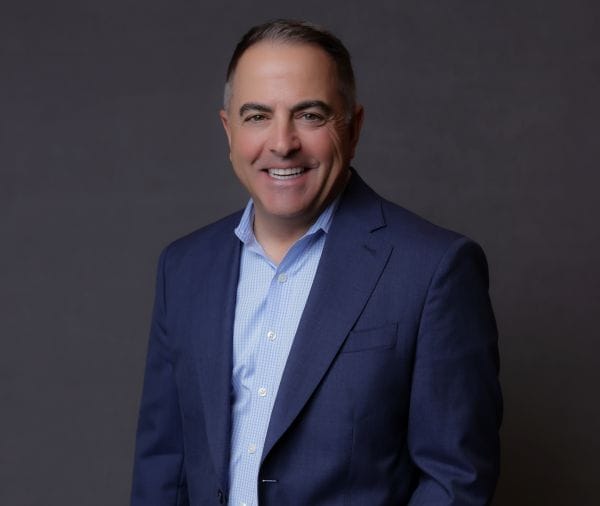
As CRO, Castello will define and lead Spinnaker’s full global go-to-market operation, including sales, solution consulting, customer success, and partner and alliance strategy. He brings decades of experience building and scaling commercial teams inside enterprise technology companies, with a consistent track record of driving revenue growth through acquisition, rapid expansion, and organizational change. He most recently served as CRO at Datavail and previously as Chief Commercial Officer at Navisite. Castello earned a B.S. in actuarial science from Penn State University and an MBA from Lehigh University.