Industry executives and experts share their predictions for 2020. Read them in this 12th annual VMblog.com series exclusive.
By Fady Masoud, Director, Solutions Marketing at Infinera
Optical Infrastructure
As we close the curtains on 2019, here are my predictions for optical infrastructure in 2020:
Prediction #1 – Compact modular platforms will become THE form factor of choice for optical deployments: Over the past few years, the optical networking industry has witnessed the rise of a new breed of platforms, called compact modular, that have constantly raised the bar on optical performance, operational flexibility, and automation. Fueled by recent breakthroughs in the development of low-power and high-performance digital signal processors (DSPs), and combining the latest technology innovations, like the miniaturization of different functions into much smaller form factors, compact modular platforms raise the bar in operational flexibility and networking economics through their ability to use different types of sleds (transponder/muxponder and photonic sleds) in the same chassis (Figure 1). Sleds can be used like Lego blocks to build any configuration (client aggregation, photonic line, or a mix of the two) in a significantly more compact footprint. Compact modular platforms are being deployed in data center interconnect applications, metro aggregation, long-haul transport, and subsea networks. It’s clear that the compelling value proposition of compact modular platforms is resonating with a lot of network operators. This is reflected in the latest report from Cignal AI, which highlights that they accounted for 30% of total North American optical hardware shipments in the first quarter of 2019, with an anticipated 28% CAGR worldwide between now and 2023. They are definitely on the path toward becoming THE form factor of choice for optical deployments in 2020.
Prediction #2 – New optical “knobs” will enhance optical performance: Worried that it’s getting harder and harder to close in on the Shannon limit? Well, there are still many new tools and knobs in the toolbox to continue to enhance optical performance. I predict that some of these capabilities will be front and center in enhancing optical performance in 2020, including:
- Nyquist subcarriers: Nyquist subcarriers divide a high-baud-rate carrier into multiple subcarriers, each with a lower, optimum baud rate, to minimize the impact of non-linear effects. Future optical engines will leverage this technology to enhance optical performance (capacity/reach).
- Probabilistic constellation shaping (PCS): As demand grows for better optical performance with higher capacity and longer reach, PCS will become a key enabling technology to deliver a combination of wavelength data rate and optical reach that is close to the theoretical capacity limit of the cable (aka the Shannon limit). Unlike other modulation schemes that use the same probability of encoding data into all constellation points, PCS reduces the probability of the outer symbols (which have higher power and are often harder to detect reliably) being used to encode data, and increases the probability of the inner symbols (which have lower power and are easier to detect) being used. PCS will be a key part of all future optical engines as they push the limits for better optical performance.
- Higher bit rate per wavelength (600G/λ): While bit rates per wavelength have been increasing in recent years (10G/λ to 40G/λ to 100G/λ to 200G/λ to 400G/λ), crossing the 400G chasm requires more sophisticated expertise that spans both opto-electronics and DSPs to overcome some of the technical challenges related to penalties caused by fiber impairments. The good news is that the industry has crossed that point and commercial 600G/λ has been field-trialed (over 250 kilometers in a live network) before becoming commercialized in various applications. Next is 800G/λ, where next-generation optical engines have already claimed to support such a bit rate. I believe that 2020 will witness the start of the journey of wide deployments of 600G/λ applications that span metro data center interconnect to metro aggregation and transport.
- L-band: For almost two decades, the L-band has been a sleeping giant of optical fiber capacity in wavelength-division multiplexing (WDM) technology, offering the potential to double capacity in a single stroke. Most deployed WDM systems operate in the C-band, while the adjacent L-band has remained largely unused despite its attractive transmission characteristics and the availability of L-band technologies. So why now? Well, despite the fact that new optical technologies (see previous bullets) are increasing fiber capacity and getting us closer to the Shannon limit, their incremental addition of capacity within the C-band is not as significant as the doubling of fiber capacity enabled by lighting up the L-band. L-band has one crucial advantage: the spectrum is, quite literally, already “in the ground,” i.e., most existing deployed fiber is capable of supporting L-band transmission alongside the existing C-band. All we need to do is add L-band-capable equipment to use it. Given the constant and ever-growing demand for bandwidth, I believe the industry will witness more L-band being lit up in 2020 by internet content providers, communication service providers, and cable operators/MSOs.
Prediction #3 – Tighter coupling between network automation and machine learning (ML): Network automation is already underway. Numerous tools and frameworks have been developed and are being used to automate recurring tasks, streamline operations, and eliminate sources of human error. Existing automation tools can be further enhanced by adding intelligence and machine learning. An example comes to mind of using machine learning and intelligence to leverage real-time network telemetry to predict and prevent fiber cuts before they happen. Another example could be various building blocks such as path computation engines, control planes, and traffic encryption blocks working in concert to deliver an intelligent and highly proactive network protection mechanism. Advanced, accurate, and fast intrusion detection enabled by ML could trigger proactive measures to virtually isolate suspicious network areas and automatically encrypt the traffic over specific links (Figure 2). The same proactive capabilities could also be applied to minimize the impact of network maintenance operations by automatically and proactively isolating affected network areas and setting up backup plans during large-scale software upgrades or disruptive network operations. I believe we will witness a tighter coupling between automation and ML algorithms/tools in 2020, which will elevate network automation to a whole new level and make a giant step toward cognitive networking.
Prediction #4 – Wider support for open interfaces and frameworks: The support of open application programming interfaces such as RESTCONF, NETCONF/YANG, and other northbound interfaces has been fueling the migration to open and software-defined networking (SDN). Moreover, open standards such as OpenROADM and OpenConfig are making inroads in service providers’ networks to help facilitate multi-vendor interoperability, accelerate the adoption of white boxes, and reduce dependency on a single vendor. So far, interoperability demonstrations have mainly been focused on the optical photonic line, where transponders from different vendors had to be bookended. I believe the evolution of “open networking” will further accelerate in 2020, when we expect vendors to further “open” their platforms and participate in a wider variety of open proofs of concept (PoCs) beyond just optical line interoperability. New PoCs could cover multi-vendor transponder interworking, SDN controller interoperability, and much more.
Prediction #5 – Pluggable coherent moving to the edge: For a long time, one of the biggest challenges in optical networking was the fact that while network traffic is inherently hub and spoke or point to multipoint, especially in metro networks, optical technology is only capable of point-to-point connections, resulting in a massive number of vastly underutilized optical interfaces and intermediate aggregation points. While the rest of telecommunication equipment has long since gone beyond this limitation (for example, a single radio/wireless receiver can “talk” to multiple endpoints), it seems to linger for optical networking. I believe 2020 will be the dawn of a new journey in solving this limitation. Technology breakthroughs in Nyquist subcarriers, low-power-consumption DSPs, and photonic integration will finally solve this problem by designing (and later introducing) coherent pluggables that are able to aggregate traffic from multiple lower-speed endpoints in a single transceiver, dramatically reducing the total number of transceivers and router ports at the hub or aggregation point. I believe in the new year we’ll witness the first demonstration of this technology, as well as an increase in the number of component vendors endorsing it with committed roadmaps.
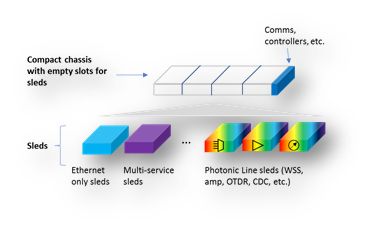
Figure 1: The anatomy of compact modular platforms
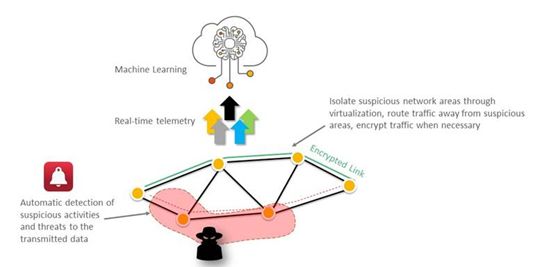
Figure 2: Example of enhancing automation with machine learning
##
About the Author

Fady Masoud is a Principal in the Solutions marketing team at Infinera and prime for the compact modular as well as Metro Core/Long Haul solutions. His area of expertise focuses on the architecture and requirements of next-generation optical networking infrastructure. During his more than 23 years in the telecommunications industry, Fady has held various positions in the optical networking domain at Nortel, Ciena and now Infinera. He started as a hardware test engineer on the first OC-192 (10 Gbps) systems and then as a Systems engineer on optical metropolitan products, all combined with hands-on field experience. Fady holds a bachelor’s degree in electrical engineering from Laval University (Quebec City, Canada) and a master’s degree in systems technology (simulation of optical networks) from the Superior School of Technology (Montreal, Canada). He has written numerous publications, including books, on next-generation optical networking, including OTN, Data Center Interconnect (DCI), Coherent Optical Networking, evolution strategies to cognitive networking, and on many other key topics.