Let’s be real about something: running Kubernetes on bare metal has always been a bit of a bargain with the infrastructure gods. You get the performance. You get the direct hardware access. You lose your weekends to provisioning scripts, firmware patches, and whatever bespoke tooling the previous team cobbled together before they found something better to do.
For years, the conventional wisdom was that this was just the price of admission for high-performance containerized workloads. If your AI training jobs needed direct GPU access, or your edge deployments couldn’t absorb virtualization overhead, you built a specialized team, you wrote the automation from scratch, and you accepted that this environment would forever live in a different operational silo from everything else in your data center.
Nutanix stepped onto the .NEXT 2026 stage in Chicago this week and said, politely but directly, that this doesn’t need to be true anymore.
The Problem That Everyone Knew About But Nobody Fully Solved
Before getting into the announcement itself, it’s worth pausing on the actual pain point, because it’s more widespread than the industry sometimes acknowledges.
Nutanix’s eighth annual Enterprise Cloud Index, published just weeks before .NEXT, surveyed 1,600 cloud, IT, and engineering executives globally and found that 85% report AI is accelerating their organization’s adoption of containers in a meaningful way. That’s not a marginal shift. That’s a near-consensus among enterprise IT leadership that containers, and by extension, Kubernetes, are now load-bearing infrastructure for AI workloads, not just a developer convenience.
Looking ahead over the next three years, 87% of executives expect their level of application containerization to increase. And 59% anticipate running more than five AI-enabled applications within that same window, including 23% who expect more than ten.
Here’s the thing, though. More containers doesn’t automatically mean more Kubernetes running in virtual machines. For a meaningful chunk of those workloads — particularly AI training, dense GPU inference, and edge deployments — virtualization isn’t a neutral layer. Every cycle spent on hypervisor overhead is a cycle not spent on the actual computation. For latency-sensitive workloads or scenarios where you’re maxing out GPU utilization, that tax adds up fast.
So organizations end up splitting the world in two. Virtual machines and their Kubernetes clusters on one side, managed by Nutanix or similar platforms with their mature operational tooling. Bare-metal Kubernetes on the other side, managed by a separate team using separate tools, with a separate operational playbook. The result is that many organizations end up building a highly specialized and siloed team for managing bare-metal Kubernetes deployments.
That’s expensive. It’s inefficient. And it makes no architectural sense when you’re trying to build a coherent platform across your data center.
Enter NKP Metal: Same Nutanix, No Hypervisor Required
On April 7, from the .NEXT conference floor in Chicago, Nutanix announced NKP Metal, an extension of the Nutanix Kubernetes Platform (NKP) that runs Kubernetes directly on bare-metal infrastructure, without requiring a virtualization layer underneath.
The pitch is deceptively simple: everything you like about the Nutanix operating model — the automation, the lifecycle management, the storage services, the consistent management plane — should work the same whether your Kubernetes clusters are running on VMs or on physical hardware. No separate toolchain. No separate team. Same platform, same operational habits, different substrate.
Dan Ciruli, Nutanix’s VP and General Manager of Cloud Native, put it plainly: “Running Kubernetes on bare metal has traditionally meant sacrificing the operational simplicity of virtualized environments. With NKP Metal, we’re extending the Nutanix operating model to bare-metal Kubernetes, combining automated lifecycle management with integrated Cloud Native AOS data services to deliver the simplicity, consistency, and enterprise storage capabilities customers need on their physical infrastructure.”
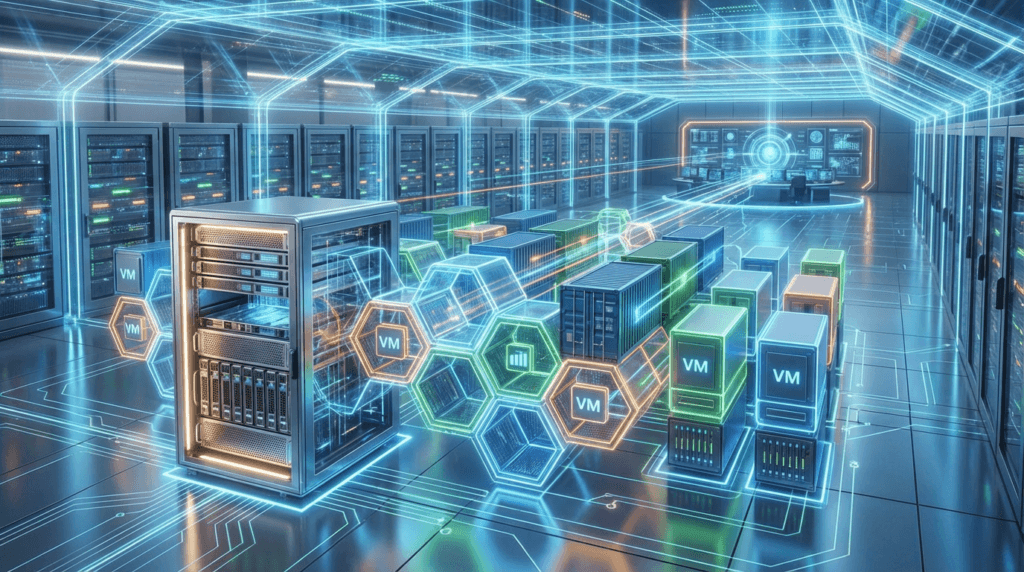
The concept Nutanix uses to describe this is worth understanding: they call it a “dual-native” architecture. Unlike solutions that are strictly hypervisor-based or strictly Kubernetes-based, NKP Metal supports a dual-native model in which containers and virtual machines operate as first-class infrastructure under a single, unified operating model. Containers aren’t a bolt-on. VMs aren’t a legacy artifact to be tolerated. Both are treated as genuine, equal citizens of the platform, which is, honestly, the only way enterprise IT actually works in practice.
What the Operational Picture Actually Looks Like
So what does NKP Metal give you, practically? The announcement breaks down into a few distinct capabilities that are worth unpacking individually.
Automated Lifecycle Management for Physical Infrastructure
This is the one that will resonate most with anyone who has ever managed a bare-metal Kubernetes cluster at scale. Provisioning new nodes is a chore. Keeping firmware and operating systems current across dozens or hundreds of physical servers is a chore. Patching Kubernetes itself is a chore. And in a bare-metal environment, all of that typically means custom scripts, manual processes, and the kind of toil that burns out good engineers.
NKP Metal addresses this through automated node deployment via Nutanix Foundation, combined with operating system and firmware lifecycle management through Lifecycle Manager. The result is that organizations can provision, scale, patch, and update bare-metal Kubernetes environments while retaining the same operational consistency they rely on for their virtualized workloads.
That last phrase — “same operational consistency” — is the real value proposition. The goal isn’t just to make bare-metal Kubernetes less painful in isolation. It’s to make it as unremarkable to operate as everything else in the Nutanix stack.
Storage That Actually Belongs at the Metal Layer
On the storage side, NKP Metal gives customers two paths: they can consume Nutanix storage through a standard Container Storage Interface (CSI), or they can use Cloud Native AOS as a purpose-built storage option for true bare-metal Kubernetes deployments, leveraging Nutanix Data Services for Kubernetes-native data services and keeping storage closer to where the workloads actually run.
The distinction matters. CSI is the broadly compatible, standard approach — good for portability and familiarity. Cloud Native AOS is the more tightly integrated option, designed specifically for this deployment model, where you want the storage to behave like it was built for the environment rather than adapted to it.
For AI training workloads in particular, where you’re moving large datasets repeatedly and throughput is everything, having storage close to the Kubernetes layer, rather than routed through a hypervisor stack, can make a real difference.
The Partner Ecosystem Behind It
NKP Metal launched with partner integrations across Ubuntu, Cisco, Intel, Lenovo, SolarWinds, Cribl, and Supermicro, covering the OS layer, compute hardware, networking, observability, and log management. That’s not a token partner list. It suggests Nutanix did the work to make sure NKP Metal would land in environments that look like real enterprise data centers, not just lab setups.
A few of the partner quotes that came out with the announcement are worth reading because they reveal what each partner is actually bringing to the table:
Canonical’s Aniket Ponkshe spoke to the developer experience: “With Ubuntu, the world’s leading operating system for containerized environments, NKP Metal will bring to enterprise customers a consistent, familiar, and seamless experience. Combining Ubuntu-based workflows developers love with Nutanix’s enterprise-grade automation and data services removes the operational friction of managing physical infrastructure at scale.”
Cisco’s Jonathan Gorlin addressed the edge and operational angle: “With NKP Metal running on Cisco infrastructure solutions, including our new Cisco Unified Edge platform, customers will gain the performance benefits of physical hardware with a cloud operating model, eliminating the operational gap between infrastructure and Kubernetes.”
Cribl’s Vlad Melnik got at the observability challenge specific to these environments: “NKP Metal is designed for the kinds of environments — bare-metal edge deployments, dense AI infrastructure, and performance-intensive workloads — that generate the highest volumes of logs, metrics, and events. That’s exactly where Cribl Edge excels: getting observability data under control at the source, before it overwhelms downstream systems.”
And Intel’s contribution isn’t purely hardware cheerleading. Intel emphasized bringing the raw power of Intel Xeon’s high core counts and superior memory bandwidth to Nutanix’s cloud-native stack — which matters specifically because many AI training workloads are bound by memory bandwidth long before they’re bound by compute.
Why Hardware Is Back on Nutanix’s Agenda
There’s a broader context worth acknowledging here. Nutanix built its reputation on abstracting hardware away, making the specific physical servers you ran on almost irrelevant to the experience of operating the platform. That was the original HCI value proposition: stop caring about the boxes, start caring about the applications.
Something has changed. The supply chain crunch that has made memory a scarce and expensive commodity is one reason Nutanix is thinking about hardware again — customers can’t quickly buy the boxes they need to run the company’s stack. And organizations migrating away from VMware may want to reuse existing hardware rather than replace it.
Add AI to that picture and hardware starts mattering in a different way too. AI training workloads have specific hardware requirements — dense GPU nodes, high-memory configurations, fast interconnects. Many of those configurations don’t run optimally inside VMs. So Nutanix is in a position where, if it wants to be the platform of record for AI infrastructure, it needs to meet those workloads where they actually live: on physical hardware, without a virtualization layer in between.
NKP Metal is the response to that reality. And it’s not really a concession — it’s an expansion. Nutanix isn’t abandoning the VM-centric model; it’s extending the same operating model to a new substrate. As Lee Caswell, SVP of Product and Solutions Marketing, put it: “The theme of the show is one platform and one experience only. The idea is that platforms are expanding to include workloads of all types that can run anywhere.”
Availability and What Comes Next
NKP Metal is currently in early access for NKP Pro and NKP Ultimate license users, with general availability expected in the second half of 2026. That’s not a long wait, and the early access window will allow the partner integrations to get hardened in real customer environments before broad rollout.
The connection to Nutanix’s larger AI story is also worth flagging. NKP Metal doesn’t exist in isolation — it’s part of a platform strategy that also includes the Nutanix Agentic AI solution, which was announced at NVIDIA GTC in March and is also heading toward general availability in the second half of 2026. That full-stack AI platform integrates compute, storage, networking, and Kubernetes services — and is explicitly designed to run efficiently across hybrid and multi-cloud environments. NKP Metal is the piece that makes the Kubernetes layer of that architecture viable on bare metal, particularly for GPU-dense inference and training scenarios.
Honestly, that’s the part that makes NKP Metal worth watching closely. Kubernetes-as-a-Service on bare metal is one thing. But as part of a broader platform that spans VMs, containers, bare metal, and cloud — managed through a single operational model — it starts to look less like a feature and more like a foundation.
The Bottom Line
For platform engineers and infrastructure architects who have spent years managing two separate operational worlds — one for VMs, one for bare-metal Kubernetes — NKP Metal is a genuine answer to a real problem. Not a partial answer, not a bridge solution, but an architectural commitment that both environments can share the same tools, the same lifecycle management, and the same storage services.
As Dan Ciruli put it, running containers across physical and virtual environments in a data center, at the edge, or in the cloud is no longer optional — “Nutanix calls this a dual-native architecture. I call it a necessity that requires consistency in creating and managing Kubernetes clusters wherever they are.”
Hard to argue with that framing. The question was never whether bare-metal Kubernetes mattered. It always did. The question was whether it would ever be manageable at enterprise scale without a dedicated team and a pile of custom tooling. NKP Metal is Nutanix’s answer — and based on the depth of the partner ecosystem, the architectural decisions, and the timing relative to the AI infrastructure buildout happening across the industry, it’s a reasonably convincing one.
##