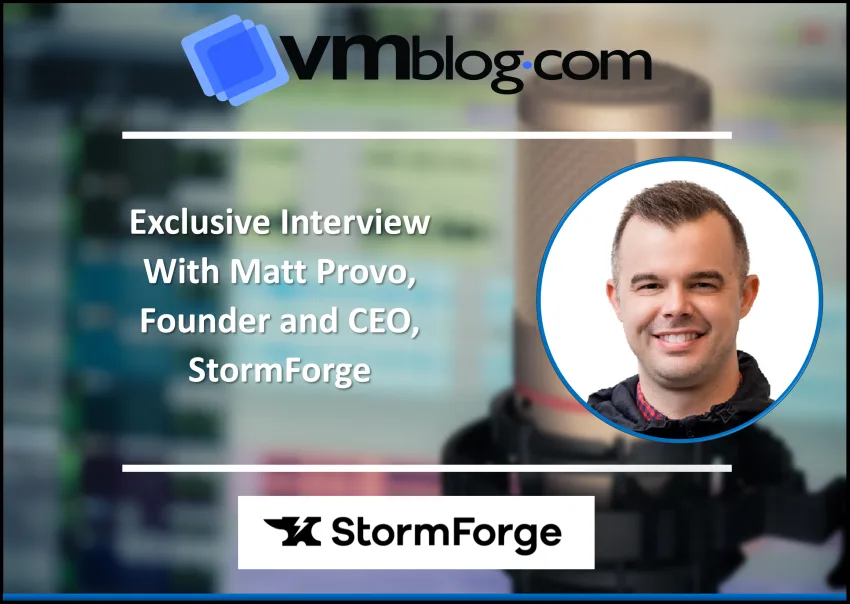
StormForge is a leader in cloud native application performance testing and resource optimization. The company’s platform uses enterprise grade performance testing coupled with machine learning to drive major application performance gains and cost reductions in complex environments.
To help drive things further, the company has just announced the release of Optimize Live. To find out more, VMblog spoke with Matt Provo, the Founder and CEO of StormForge.
VMblog: Congratulations on the launch of Optimize Live. Can you tell our readers about it?
Matt Provo: StormForge Optimize Live uses Machine Learning to help enterprises move from observability to actionability. Optimize Live intelligently and automatically improves efficiency of cloud native production environments with minimal effort for fast time-to-value. It learns from data collected by observability solutions like Prometheus and Datadog, and provides actionable insights and recommendations for Kubernetes configuration changes that will result in lower resource usage and cost, and reduced risk of application performance issues caused by CPU throttling or out-of-memory errors. It makes StormForge the only vendor to now combine proactive, pre-production and production optimization in a single platform.
VMblog: What are the challenges facing organizations that make something like StormForge Optimize Live an attractive solution?
Provo: Configuring Kubernetes in cloud native environments is complex. As a result, many organizations over-provision cloud environments (often by 50% or more) to try and mitigate risk of performance and availability issues. Or, they do manual tuning of the application to try and achieve efficiency, but that only slows down time-to-market by distracting DevOps teams with a trial-and-error approach. StormForge Optimize Live ensures that cloud native environments are never over-provisioned while still meeting SLAs and SLOs, all without manual tuning. As a result, dev teams can focus their efforts on innovation, not tweaking and tuning YAML files.
VMblog: Previously, you provided our readers insights about 3 cloud-native gaps around complexity, data, and skills. How does StormForge plan to close the loop on those gaps?
Provo: StormForge closes these gaps by providing practitioners across disparate teams the ability to confidently and continuously plan in pre-production and production using the tools and data they already have. StormForge now allows customers to expand their use of ML for optimization not just using load testing in pre-production but also traces, telemetry, and logs from observability tools for production optimization. Finally, with strong integrations and partnerships across major enterprise cloud providers, observability platforms and performance engineering suites, users will feel confident and support throughout the entire cloud native lifecycle journey.
VMblog: Some organizations may be nervous about letting machine learning make changes in production. How do you alleviate that concern?
Provo: It’s understandable that enterprises want to be sure any ML is proven before trusting it, very much like self-driving cars. We built StormForge Optimize Live to give you full control. You can configure it to provide recommendations, but only implement those recommendations in production on your approval. Once you develop more trust in the recommendations you may want to change that to automatically implement recommendations. Either way, we let the customer use the approach that makes the most sense for them and their specific applications.
VMblog: Finally, what’s next for StormForge?
Provo: While the first release of Optimize Live will provide significant benefits to our customers, we see opportunities for providing additional efficiency for Kubernetes environments. We will be going beyond the application layer, so we’ll be looking at node selection and bin packing of pods. We’ll also be adding two way scaling, or the ability to do both vertical and horizontal scaling more efficiently. And finally, we’ll be looking at more and deeper integrations with partners, including cloud providers and observability vendors.
##