Industry executives and experts share their predictions for 2026. Read them in this 18th annual VMblog.com series exclusive.
By James Urquhart, Field CTO and Technology Evangelist, Kamiwaza AI
2025 has been a year where organizations have begun to shift from fascination with agentic AI to real experimentation. As we near the end of the year, it’s become clear that we’re still in the early stages of truly understanding what multi-agent systems mean and how they impact the ways businesses build, govern, and secure their operations. There’s an incredible acceleration in the capabilities of these autonomous agents, but the systems are self-organizing, negotiating, and adapting faster than any current centralized process can keep up with.
In the past 12 months, we’ve started to expose a critical gap – one where our infrastructure for managing intelligence is still designed for static, human-defined systems. Traditional access control models, developer workflows – even cultural approaches to engineering – assume predictability, but today’s AI can reason independently, creating patterns that can’t be planned for or programmed. Here the challenge isn’t just building smarter agents, but to develop the frameworks, orchestration layers, and human oversight models that can actually keep pace with them.
There’s a lot of optimism here because nearly every major transformation in technology has followed a similar pattern of confusion first, coherence later. Don’t forget the shift from servers to cloud – we’re about to see that type of shift once again as AI moves from single models to distributed, agentic architectures.
Here are three trends that chart this transformation, where we’re headed by 2030, and what organizations need to prepare for along the way.
Agentic AI Will Force Organizations To Re-Evaluate Their Access Control Models
One example of this transformation is role-based access control and other human-defined access control models that are ill-equipped for governance in an AI-driven world, especially with the rise of multi-agent systems. As autonomous agents interact and organize in unpredictable ways, security must shift from static permissions to behavior-based safeguards capable of detecting emergent patterns. By 2026, a wave of innovations will focus on dynamic security, including relationship- and attribute-based access control. By 2030, organizations that rely heavily on AI will need entirely new security frameworks to monitor agent behavior in real time and contain risks from unplanned actions.
Rise of Hive Architectures and AI Orchestration Platforms
We can expect a major shift from simple agent swarms to more structured “hive” architectures-systems where a central decision-making agent orchestrates a team of specialized agents. This approach will enable more scalable, task-oriented automation across enterprises. We can also expect a clearer separation between the tools used to build agents and the platforms used to run and manage them, similar to how application development and cloud deployment diverged in past technology eras. These orchestration platforms will become foundational infrastructure for AI-driven businesses by 2030.
Shift from Coding to Conversational, Outcome-Based AI Development
Finally, by 2030, the developer community philosophy will shift to prioritize business outcomes, favoring conversational collaboration with AI agents to design systems rather than line by line, code-focused development. In this new outcome-based orchestration paradigm, users will describe the results they want, and AI systems will propose solution paths, assemble agent teams, and generate the logic required to deliver business outcomes. Human engineers will still guide architecture, reliability, and security, but AI will increasingly shoulder the complexity of building and adapting systems. This will be an inherently iterative process-an ongoing cycle of co-creation and adaptation, where both outcomes and solutions continually evolve in response to changing conditions and new possibilities.
Where the Real Work Happens Next
From now on the real work is operational. Over the next five years we’re entering an era where companies will formalize two distinct but connected domains:
- Agent creation: the prompts, models, and skill sets that define capabilities, and,
- Agent operations: the systems that orchestrate, govern, and secure those agents at scale.
Again, this separation can be anticipated because a similar split occurred between software development and cloud deployment. Notably this separation will be a defining factor for which organizations scale responsibly for the remainder of the decade.
Early adopters have already emerged in industries that demand transparency, compliance, and measurable outcomes, like federal government, financial services, HR, and supply chain management. For these organizations, agentic AI isn’t a future vision but rather an operational necessity, and they’re proactively building guardrails, monitoring behavior, and training AI systems not just to execute but to explain.
While user interfaces will remain conversational in appearance – aka text prompts, chat commands, voice, etc. – the layers beneath will become more complex. Hives will coordinate specialized agents in real time, security will adapt dynamically, and “coding” will increasingly mean describing outcomes instead of typing commands and instructions.
For organizations that feel behind, the best way forward is to simply start. Define the outcomes that matter most, establish safety rails, and pilot agent teams across areas of the business where speed and precision can make a measurable difference. Those that can treat their data and intelligence as a living, collaborative system will ultimately be the ones best positioned to thrive as agentic AI moves out of fascination, to experimentation, and finally orchestration.
##
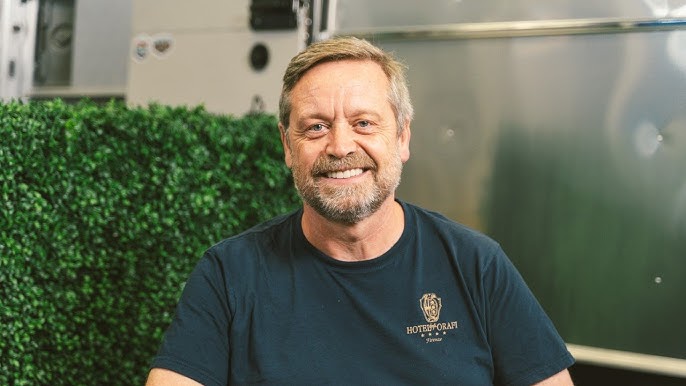
James Urquhart is the Field CTO and Technology Evangelist for Kamiwaza AI, and has 30 years of experience designing, deploying, and operationalizing distributed systems at scale. Recognized by MIT Technology Review as one of the �Ten Most Influential People in Cloud Computing,� he is the author of Flow Architectures: The Future of Streaming and Event-Driven Integration and has held senior roles at VMware, Dell, Cisco, and AWS.