As cyber threats increasingly target vulnerable embedded and IoT devices deployed in remote environments, traditional software-based security measures are proving inadequate against sophisticated physical attacks. Organizations across industrial, medical, and public sectors face mounting pressure to secure edge devices that often lack proper physical safeguards, creating critical entry points for attackers to compromise entire networks. The challenge is compounded by the need to retrofit security into existing systems without costly redesigns, all while meeting evolving regulatory requirements like the EU Cyber Resilience Act and NIS2.
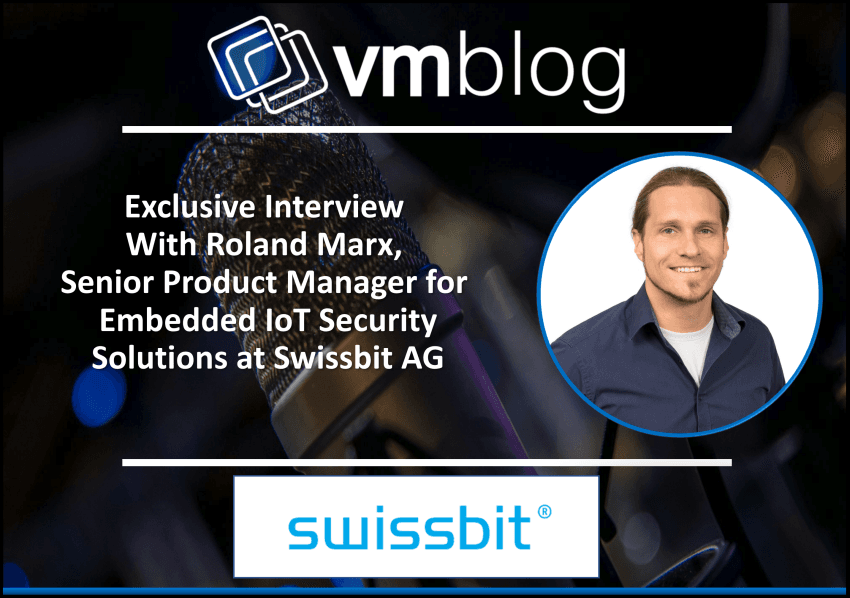
In this exclusive VMblog interview, Roland Marx, Senior Product Manager for Embedded IoT Security Solutions at Swissbit AG, reveals how his company’s hardware-based approach is transforming embedded system security. Marx discusses Swissbit’s unique plug-and-play security solutions that protect the physical layer without requiring system overhauls, from AES-256 encrypted microSD cards with secure boot capabilities to the innovative iShield Key 2 series that combines FIDO-based authentication with physical access control. With all products manufactured in Germany under complete supply chain transparency, Swissbit offers organizations a pathway to strengthen their security posture while staying ahead of regulatory compliance demands.
++
VMblog: How does Swissbit’s approach differ from traditional cybersecurity solutions?
Roland Marx: Swissbit offers hardware-based, plug-and-play security solutions that safeguard the physical layer without necessitating system redesigns. Our secure storage products, including microSD cards with AES-256 encryption and secure boot capabilities, can be retrofitted to both new and legacy embedded systems. This approach addresses vulnerabilities at the hardware level, offering protection that software-only solutions cannot provide, particularly for edge-generated data like video or sensor streams. We can help make hardware more secure, even later in its Lifecycle, and that’s a unique approach.
VMblog: What makes physical security vulnerabilities in embedded systems a critical concern?
Marx: Embedded and edge systems deployed in remote or harsh environments face significant physical attack risks that traditional cybersecurity measures often overlook. These devices – including consumer IoT devices or devices without displays (such as charging stations) – need to be configured and are vulnerable to tampering, data theft, and malware injection. Currently in these devices, SD cards or Flash drives are used because of their usability. However, this is a weak spot if not protected securely. Attackers can read, change, and disclose sensitive data, keys, etc.. Unlike cloud infrastructure, they typically lack proper physical safeguards, creating entry points that attackers can exploit to compromise entire networks or steal sensitive data.
VMblog: How do Swissbit’s solutions help with regulatory compliance?
Marx: We know the regulations many customers face, but often are not fully aware. When there comes the time to act, it’s often too late for redesigns so the risk of product discontinuation or fines is dramatically rising. Our hardware-based security solutions are designed to help organizations meet the requirements of regulations like the EU Cyber Resilience Act and NIS2. We provide the technical safeguards needed for compliance in industrial, medical, and public-sector environments. We do this in terms of many examples and use case descriptions that help our customers to integrate extra security and make it part of their security chain.
With Swissbit, you can strengthen your security posture in a sustainable, future-proof way – without the need for major system overhauls. This enables you to stay ahead of evolving regulatory standards while keeping your operations running smoothly.

VMblog: What advantages does Swissbit’s German manufacturing provide for security applications?
Marx: All Swissbit products are manufactured at the company’s own facility in Germany, ensuring complete supply chain transparency and industrial-grade quality control. This approach provides trusted reliability crucial for security-critical applications, eliminating concerns about compromised components or unknown manufacturing processes. For organizations requiring verified security solutions, this controlled manufacturing environment offers assurance that products meet stringent security standards from production through deployment. With roots in Siemens and decades of experience in microelectronics, Swissbit delivers verified, reliable solutions that meet the highest security requirements from design to deployment.
VMblog: What is the iShield Key 2 and how does it address enterprise security needs?
Marx: Another key focus at Black Hat is our portfolio of authentication solutions – led by the iShield Key 2 series. This compact device combines FIDO-based multi-protocol authentication with physical access control, enabling secure digital login and facility entry in one unified solution. Designed for enterprise and government environments, the iShield Key 2 eliminates the need for separate tokens and access cards, simplifying security management while enhancing both digital identity protection and physical access enforcement.
##